DBD Plasma
Atmospheric cold plasma for selective synthesis
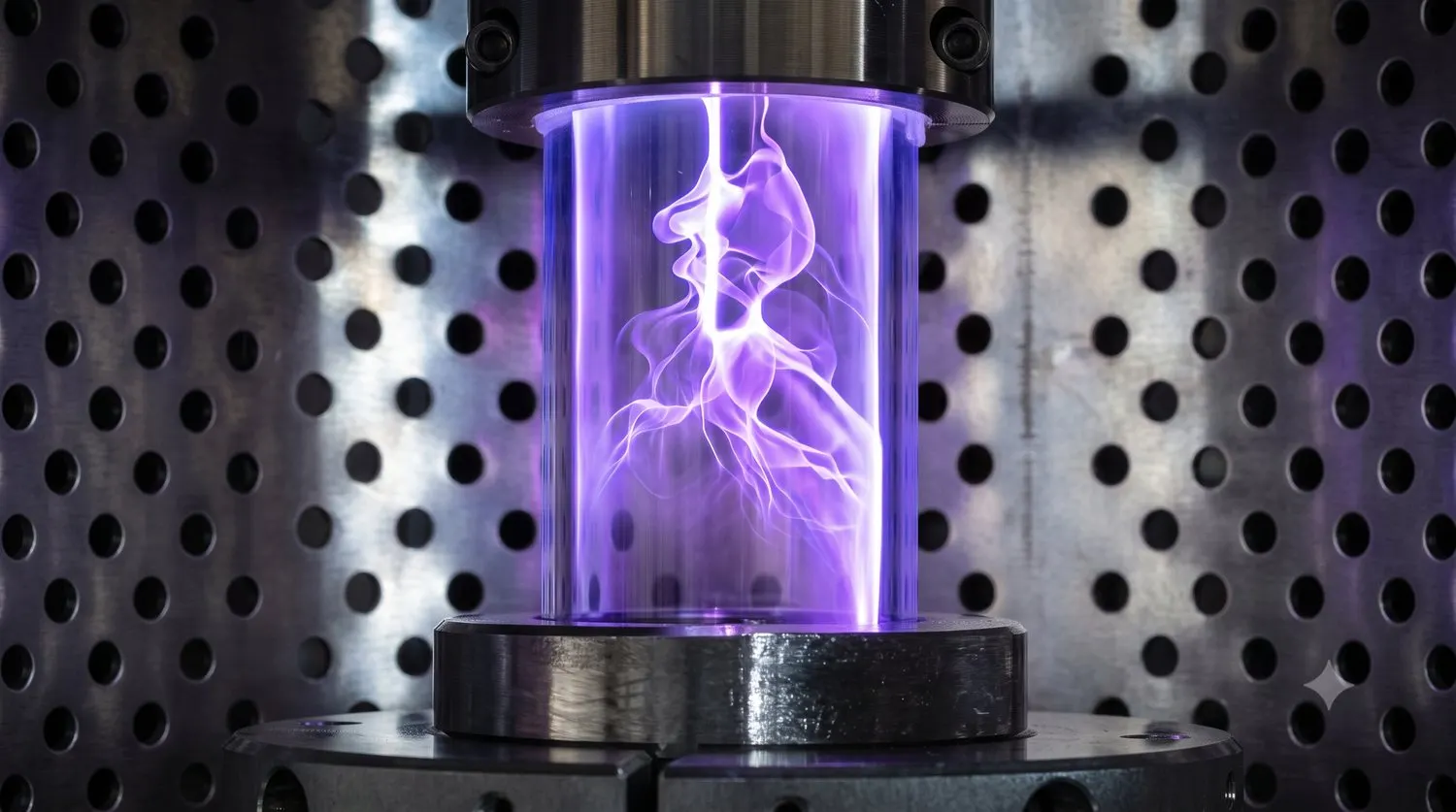
At InVerTec, we leverage Dielectric Barrier Discharge (DBD) technology to induce complex chemical reactions using atmospheric cold plasma. The DBD principle relies on an alternating current (AC) gas discharge where two electrodes are galvanically separated by quartz dielectrics, preventing any direct current flow. By applying an AC voltage in the two-digit kilovolt range, a plasma is ignited within the gas-filled gap, accelerating the valence electrons of the process gas to create a highly reactive mixture of radicals, charged particles, and UV radiation that actively drives chemical synthesis.
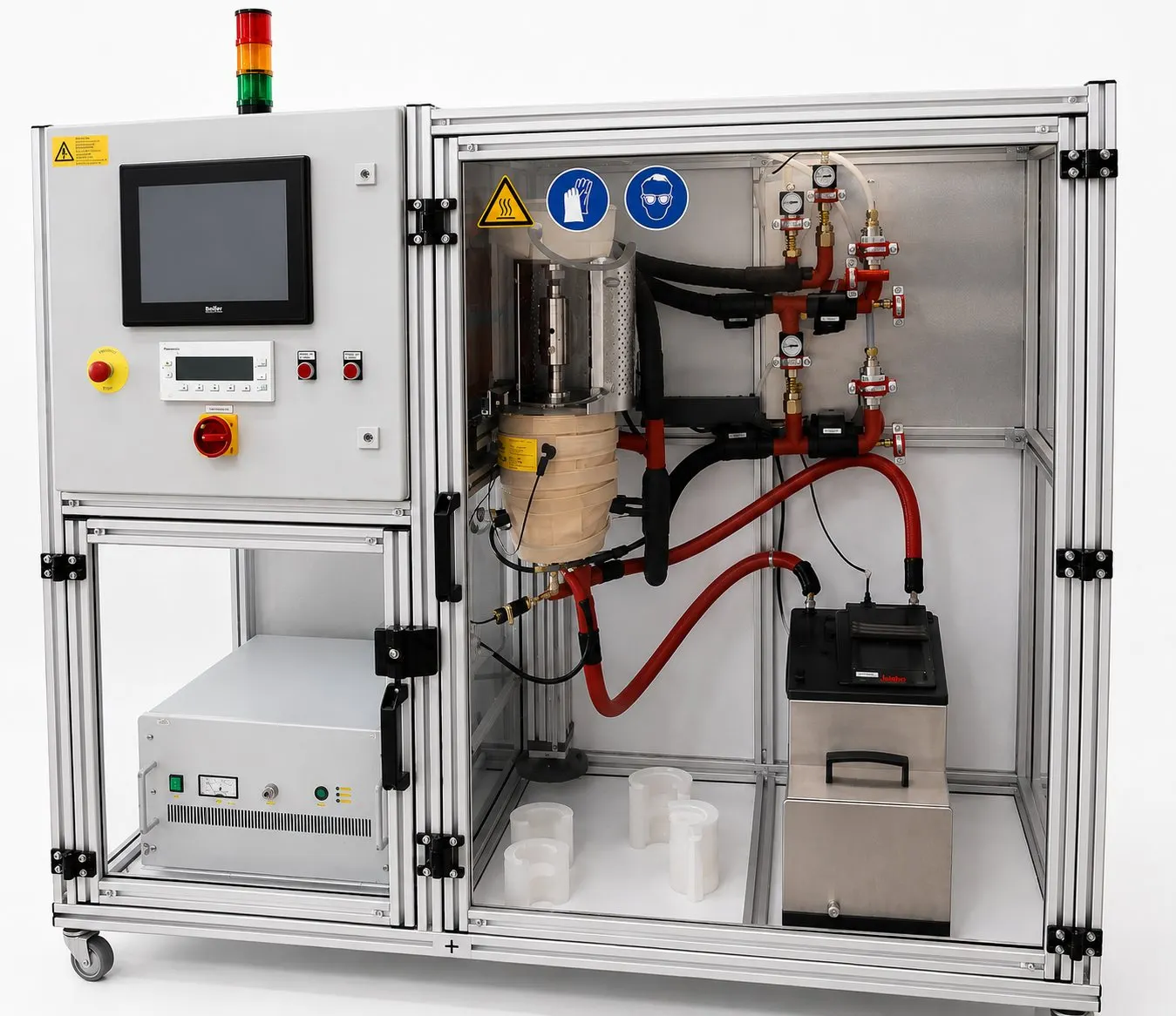
We engineer and deliver highly automated, turnkey DBD plasma plants that are easily adaptable to diverse research and industrial needs. While exceptionally well-suited for organic synthesis chemistry utilizing gaseous precursors, our systems are custom-designed to be flexible for a wide range of continuous-operation applications.
Key capabilities
- Non-thermal atmospheric cold plasma for selective chemical synthesis
- Concentric quartz dielectric geometry with adjustable gap sizes (1, 2, or 3 mm)
- High-voltage AC operation up to 20 kV (peak-to-peak) and 60 kHz
- Multi-layered sensor safety architecture with automated shutdown interlocks
- Centralized cRIO processor control with intuitive Touch Screen HMI
- Baseline thermal benchmarking mode to isolate plasma-induced effects
Technical Focus
- Flexible Reactor Geometry: To accommodate varying process requirements, the reactor utilizes concentric electrodes separated by quartz tubes with adjustable plasma gap sizes (e.g., 1, 2, or 3 mm), allowing for highly precise, variable plasma volumes. The integrated generator applies voltages up to 20 kV (peak-to-peak) at frequencies up to 60 kHz to maintain a highly stable plasma.
- Integrated Safety Architecture: Because the reactor incorporates delicate quartz components and operates at high voltages, the plant is secured by a robust, multi-layered safety framework. A comprehensive network of pressure, temperature, and electrical plasma sensors continuously monitors the system. If operational deviations or early blockages (such as soot formation) are detected, the system automatically triggers multi-stage alarms or full safe-shutdowns, ensuring complete mechanical and electrical safety at all times.
Achievements
- Advanced Process Control: The entire plant is governed by a high-performance process control system utilizing a centralized cRIO-based processor and an intuitive Touch Screen HMI. This system manages all digital and analog I/O signals, seamlessly integrates upstream static mixers for optimal fluid dynamics, and automatically calculates critical process metrics in real time.
- Thermal Benchmarking: For precise analytical evaluation, the plant can be operated entirely without plasma. Using purely the integrated heating systems, researchers can conduct baseline thermal comparison tests under identical fluid dynamic conditions to accurately isolate the chemical effects induced solely by the plasma.