Microwave Heating at High Pressure
Continuous flow at up to 25 bar and 400 °C
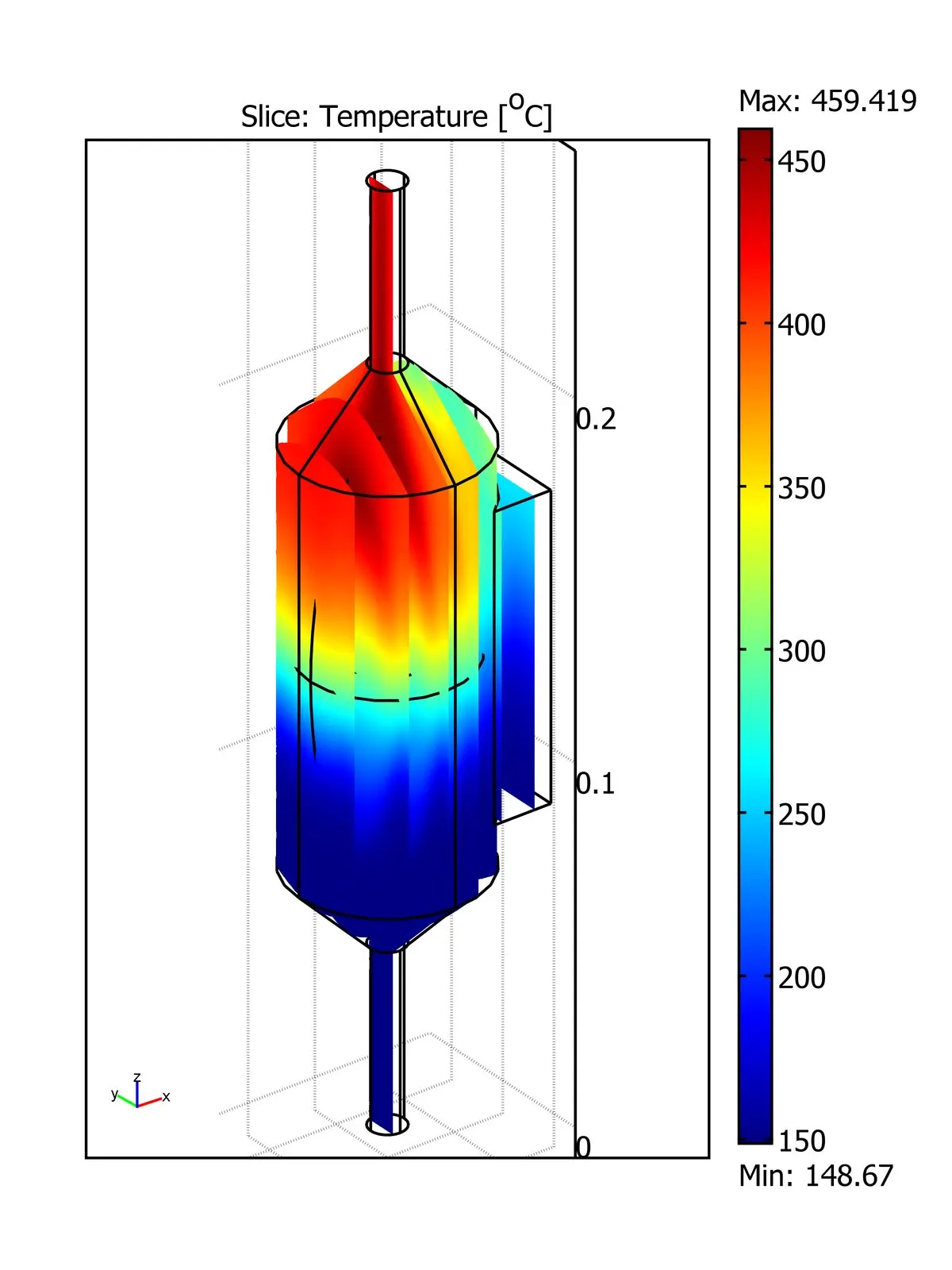
In conventional thermal processing, transferring high heat fluxes through physical vessel walls frequently causes superheated boundary layers, localized coking, and thermal degradation of sensitive fluids. Direct microwave heating eliminates these boundary constraints by coupling electromagnetic energy volumetrically throughout the process medium, enabling rapid and uniform temperature escalation.
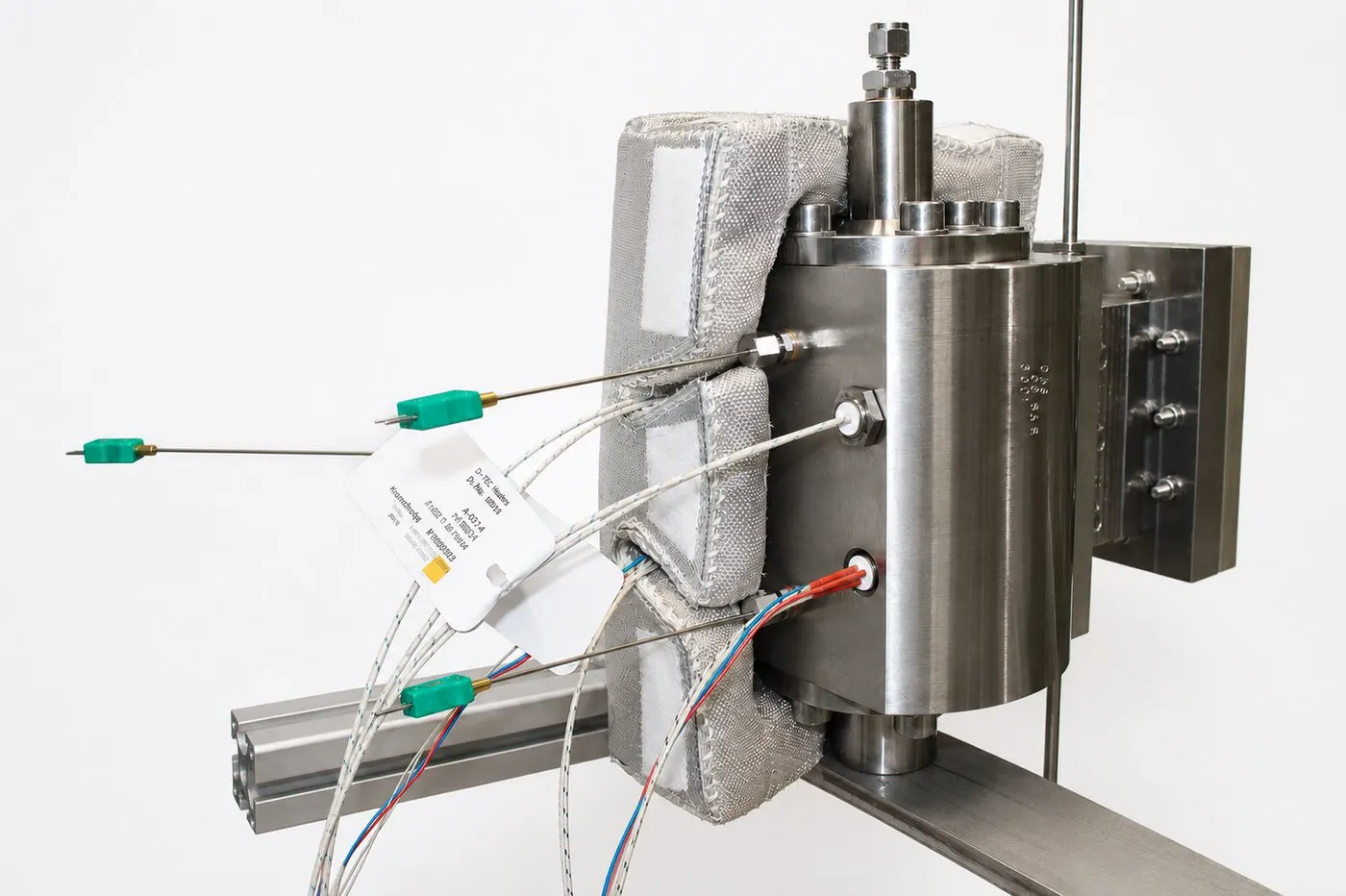
However, applying microwave fields under extreme thermodynamic conditions—such as elevated pressures up to 25 bar and temperatures reaching 400 °C—presents substantial engineering challenges in cavity design, dielectric property matching, and mechanical integrity.
Key capabilities
- Direct volumetric heating without wall coking or boundary overheating
- Continuous-flow operation at pressures up to 25 bar and temperatures up to 400 °C
- Numerically simulated resonator geometries preventing arcing or plasma ignition
- High-pressure, chemically resistant dielectric microwave windows
- Skid-mounted architecture with automated pressure and flow regulation
- Real-time process monitoring and inline fluid treatment
Technical Focus
- Optimized Resonator Geometries: Simulated and tuned using numerical electromagnetic field modeling to ensure homogeneous power distribution and prevent localized arcing or parasitic plasma ignition.
- High-Pressure Microwave Windows: Specialized dielectric window assemblies engineered for hermetic pressure retention, chemical resistance, and minimal dielectric transmission losses.
- Continuous In-Line Operation: Skid-mounted architectures integrating high-pressure fluid delivery, precise automated pressure regulation, and real-time process monitoring.
Application Highlight: Viscosity Adjustment of Industrial Oils
A prime application of this platform is the continuous thermal treatment of industrial oils. By delivering uniform volumetric energy without contact with overheated reactor surfaces, the system facilitates selective cracking and structural rearrangement of hydrocarbon chains to precisely adjust fluid viscosity under stable operation at 25 bar and 400 °C.