Fluidized Bed Reactors (FBR)
Intense mixing, superior heat and mass transfer
Fluidized Bed Reactors (FBR) are widely established across industrial process engineering for demanding thermal and chemical conversion processes, including pyrolysis, gasification, and catalytic cracking of advanced materials and polymers, high-temperature calcination of ores and inorganic solids, and continuous drying and surface functionalization of free-flowing particles.
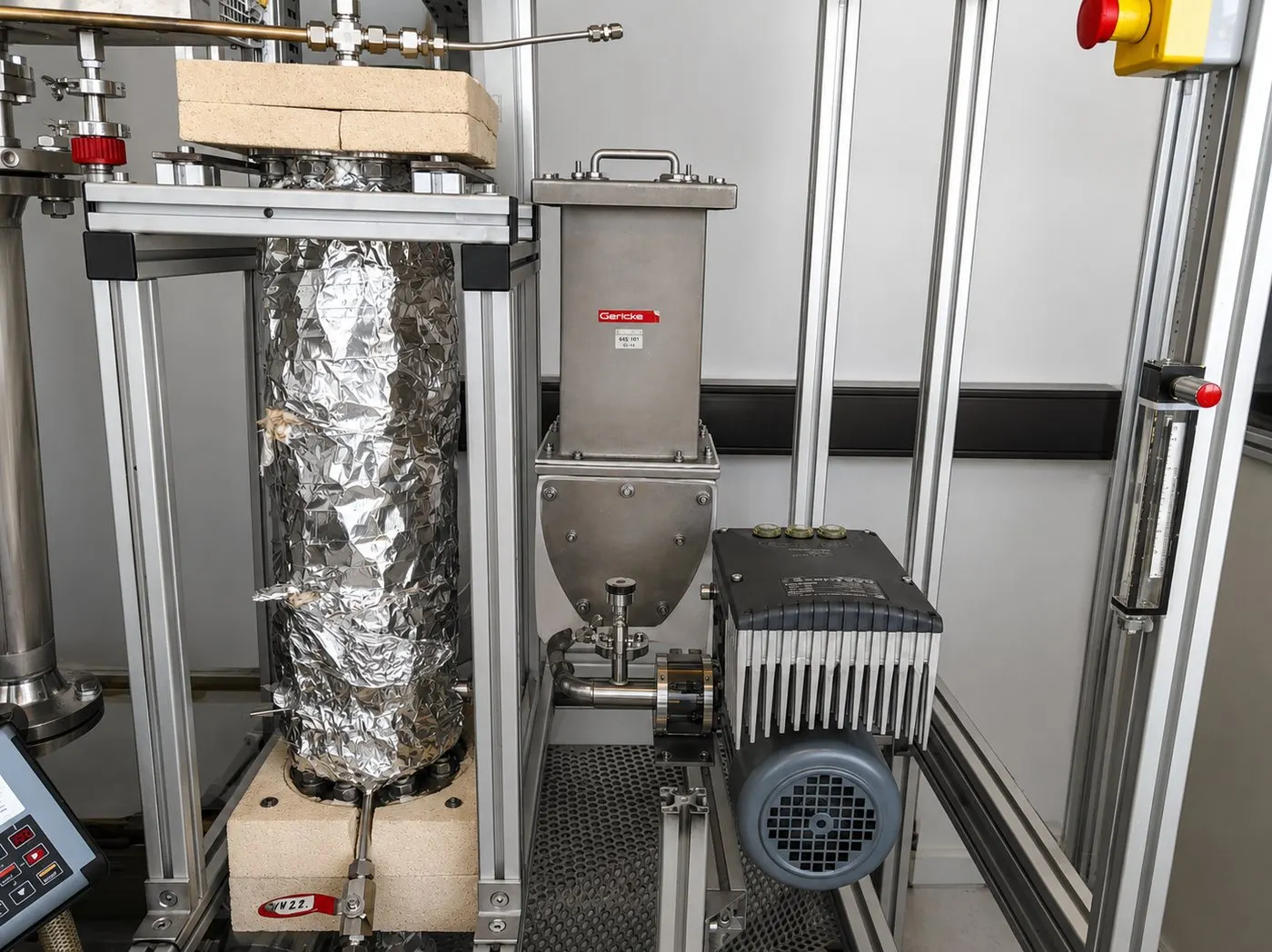
At InVerTec’s technical facilities, customized combinations of tailored fluidized bed configurations and advanced electrothermal heating systems are experimentally investigated, optimized, and validated from laboratory scale to pilot-scale demonstration.
Key capabilities
- Intense solids mixing and large gas–solid interfacial area
- Superior convective and particle-to-particle heat transfer
- High interphase mass transfer rates
- Tailor-made fluidization regimes and residence time control
- Flexible integration of resistance, IR, microwave, induction, and plasma heating
- Process validation and scale-up from laboratory to pilot scale
Technical Focus
Beyond standard stationary beds, InVerTec designs and operates diverse FBR configurations coupled with custom electrothermal heating technologies (electrical resistance heaters, infrared, microwave, induction, and plasma burners/torches) tailored to specific fluid dynamics, particle properties, and residence time requirements:
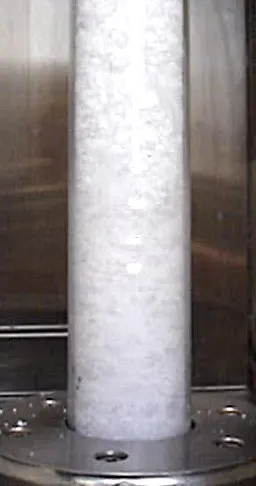
- Stationary Fluidized Bed: Particles are homogeneously fluidized by the upward gas flow and retained continuously within the bed zone.
- Bubbling Fluidized Bed: Increased gas velocity induces bubble formation throughout the bed, promoting rapid solids circulation and macro-scale mixing.
- Circulating Fluidized Bed (CFB): Operated near pneumatic transport velocities; entrained particles are separated from the off-gas stream via cyclones and continuously reinjected back into the reactor bed.
- Transport Reactors (Riser / Downer): High-velocity systems operating beyond pneumatic transport limits without solids recirculation, providing tightly controlled, ultra-short residence times. Downer configurations utilize gravity in co-current flow for rapid transport.
- Annular Fluidized Bed: Equipped with a central nozzle positioned in the upper expanded bed, supplying targeted secondary gas to establish distinct reaction zones.
- Vibrated Fluidized Bed: Combines fluidizing gas flow with controlled mechanical vibration to enhance fluidization quality for fine, cohesive, or irregularly shaped powders.
Achievements
A distinctive engineering strength of InVerTec is the integration of diverse electrothermal heating technologies into custom fluidized bed systems: electrical resistance heaters, infrared (IR) heating, microwave heating, induction heating, and plasma burners & torches.
InVerTec has also successfully validated and scaled fluidized bed processes from miniplant trials to full industrial implementation, including the development and evaluation of fluidized bed pyrolysis for fluoroelastomer recycling (2024), the engineering and commissioning of 500 t/a PTFE depolymerization plants in Gendorf (2015) and for the Asian market (2025), and the engineering of a 15,000 t/y polystyrene depolymerization plant (2021).